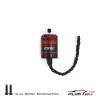
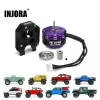
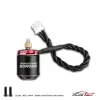
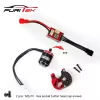
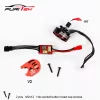
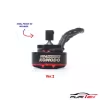
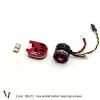
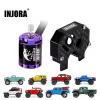
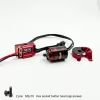
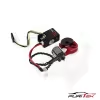
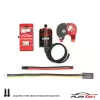
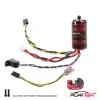
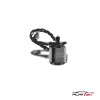
Brushless motors are a great upgrade over brushed motors. As the name suggests, they have no brushes, so there is very little that can break due to usage - worst case, a bearing might go bad.
That being said, they are also more difficult to drive. You will need an ESC that can handle brushless motors, so this is not a drop-in replacement for a brushed motor. Additionally, when upgrading to a higher-performance brushless motor, it may have different dimensions than the original brushed motor, which means some mechanical modifications might be required, or it might even need a custom motor mount.
The most important specifications are stator size and KV rating. KV indicates how fast the motor rotates per volt - for example, a 2600KV motor spins at 2600 RPM per volt applied. The more voltage you apply, the faster the motor spins.
Stator size is a good indicator of torque. Generally speaking, the bigger the stator volume, the higher the torque. This is affected by both stator height and diameter, so a taller or wider stator will typically provide more torque.